Storm Winds Test the Biggest Opening on Your House
Picture a spring evening when the sky turns green and the warning sirens start. Most families think about the basement, the windows and the trees leaning over the roof. Few think about the garage door, even though it covers the largest opening in the house and is often made of some of the lightest materials on the outside of the home.
That oversight matters in a region where severe thunderstorms, straight-line winds and the occasional tornado are part of the yearly routine. Anyone looking into Memphis residential garage doors will find that wind performance gets far less attention than color, window inserts or panel style, even though it can decide whether a storm stays a nuisance or turns into a major insurance claim.
The reason comes down to pressure. When a garage door gives way, it doesn’t just let in rain and debris. It changes how wind pushes on the entire structure, and that chain reaction can reach parts of the house well beyond the garage.
How One Door Can Endanger a Whole Roof
A house in a windstorm acts something like a sealed box. Wind pushes on the side facing the storm and pulls on the roof and the walls facing away. As long as the shell stays closed, the framing handles those forces reasonably well.
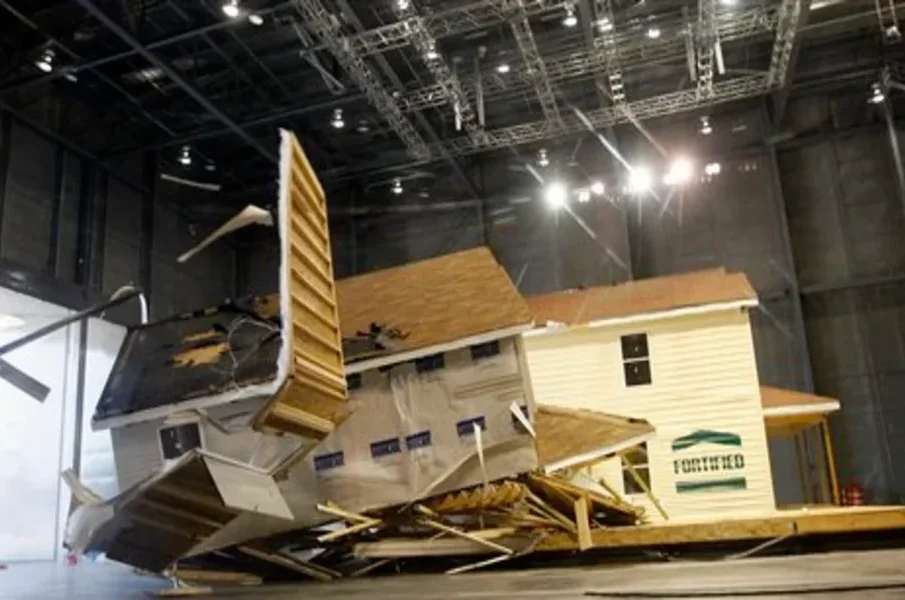
When a large opening fails, wind rushes inside and pressurizes the house from within. Now the roof is being pushed up from below while it’s also being pulled from above. Research by the Insurance Institute for Business and Home Safety has shown that a failed garage door can set off a cascade of damage, with that internal pressure pushing up on the roof and out on the exterior walls. In bad cases, roof decking lifts off, gable walls bow out, and a garage repair turns into structural work.
Double-wide doors are especially at risk. A larger panel area means more total force, and a sixteen-foot door made of thin steel with no reinforcement can bend inward like a sheet of paper under gusts that would barely bother a shingle.
Why Older Homes Deserve a Closer Look
Garage doors haven’t always been held to wind standards. Requirements for wind-rated residential doors came into building codes fairly recently, so a house that still has its original door from the 1990s or earlier probably has one that was never tested against storm pressure. Many neighborhoods built during earlier growth periods fall into this group.
Even newer doors aren’t always as strong as owners assume. A door can be rated at the factory and still be put in with lighter hardware, the wrong number of fasteners, or a weak connection to the framing around the opening. In storm testing, doors fail at the tracks, hinges and mounting points as often as they fail through the panels.
Reading the Clues on Your Own Door
A few minutes in the garage can tell you a lot about how your door might hold up.
The label. Wind-rated doors usually carry a sticker, often on an inside panel or along the edge of the track. It lists design pressures as positive and negative values in pounds per square foot. Positive pressure is wind pushing in; negative pressure is suction pulling out. No label, or a label with no pressure numbers, usually means the door’s wind performance is unknown.
The struts. Look across the inside of the door for horizontal steel braces fastened to the sections. Wind-rated doors often have several. A wide door with no struts at all usually has very little resistance to bending.
The tracks and brackets. Check whether the vertical tracks are fastened firmly into solid framing, not just into drywall or thin trim. Loose lag bolts, rusted brackets or tracks that move when you push on them are weak points.
The panels themselves. Dents, cracks along the section joints and rust near the bottom all reduce strength. A door that already flexes when you press a palm against it won’t do much better against gusts many times stronger.
Choices When Replacing a Door
When the time comes for a new door, wind rating belongs on the list next to looks and insulation. Insulated steel doors with a foam core are naturally stiffer than single-layer steel, and most manufacturers offer wind-load versions of their popular styles, so homeowners rarely have to give up appearance to get strength.
Windows in the top section add character, but they deserve some thought. Glass is an entry point for flying debris. Choosing smaller window sections or impact-resistant glazing helps balance curb appeal with resilience.
The opener matters too, though it’s less obvious. Storms often knock out power, and a door stuck closed during cleanup, or stuck open while the next band of weather comes through, causes its own problems. Openers with battery backup keep the door working through outages, and every family member should know how to use the manual release cord safely.
Temporary Help for an Unrated Door
Not every household is ready to replace a door before storm season. Temporary braces that fasten vertically to the floor and header can stiffen an existing door before a forecasted wind event. Some homeowners keep them in the garage and put them up only when watches are issued. They aren’t a permanent fix, and the car stays inside while they’re installed, but they add real resistance on the nights that matter most.
Basic upkeep helps as well. Tightening loose hardware, replacing worn rollers and fixing a door that sits crooked in its opening all reduce the chance that one weak point gives way under load. A balanced, well-fastened door spreads wind pressure across all of its hardware rather than letting a single bracket take the strain.
Rethinking the Front of the House
Garage doors now take up a large share of the front of many homes, often more than the front door and windows combined. That makes them a big part of how a house looks from the street, and a big part of how it handles severe weather. Thinking of the garage door as a structural opening, not just a moving panel, changes how homeowners maintain it, upgrade it and plan for storm season. The best time to find out whether your door can hold is on a calm afternoon with a flashlight, well before the sirens go off.

Leave a reply


-
How Twin Falls Winds and Dust Wear Down Window Seals
The National Weather Service in Boise has issued wind advisories for Twin ... -
-
-
-