Did the City Sewer or Your Own Line Flood the Basement?
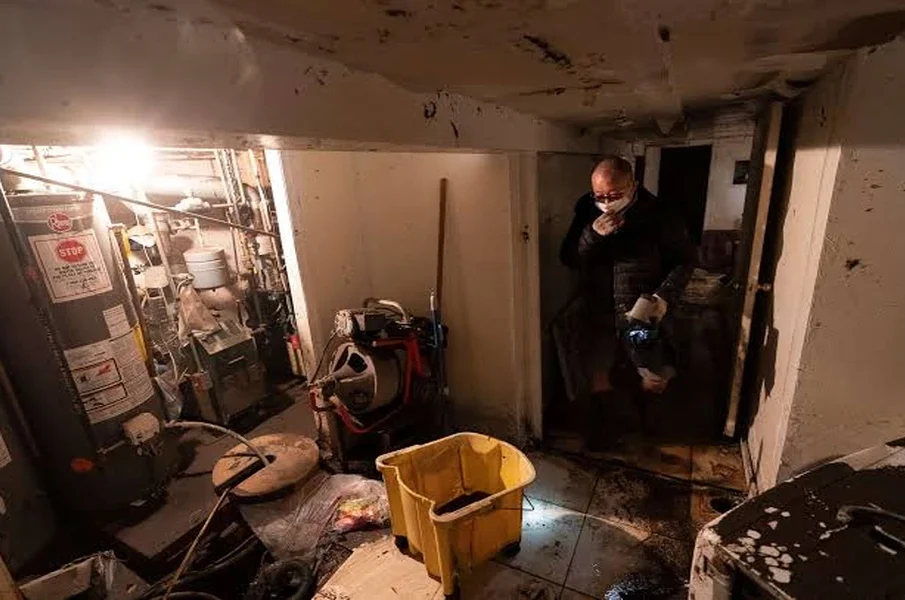
Michigan gives homeowners forty-five days. That’s the window to file a written claim if a public sewer caused sewage to come up through a basement floor drain, and the clock starts on the day the damage is discovered, not the day the carpet finally goes to the curb. Many families never learn the deadline exists until it has already passed, mostly because the first week after a backup is consumed by smell, cleanup and insurance calls.
The question of where the failure happened shapes everything that follows, from who pays to how the cleanup is documented. Help with Rochester sewage back ups often starts with that question rather than with a shop vacuum. The crew at incarestorationandservices.com takes calls at any hour from the Rochester area, handles contaminated water removal and the demolition that soaked drywall usually needs, and works through the mess in an order that leaves a clear record of what was damaged before anything gets hauled away.
Following the Pipe From Your Toilet to the Street
Every drain in a house eventually feeds a single building drain, usually running beneath the basement slab. That line leaves the foundation and becomes what Michigan communities call the private sewer lead or lateral. It runs under the yard until it connects with the public sewer main, typically somewhere under the street. From there, local mains feed larger interceptors that carry wastewater toward regional treatment.
Ownership splits along that path. In most Oakland County communities, the homeowner is responsible for everything from the fixtures to the point where the lead meets the main, and that includes the stretch under the lawn and sometimes under the sidewalk. The city, township or county is responsible for the main itself.
A backup can start at any point along that route, and the clues tend to point in a particular direction.
When the Trouble Is Inside Your Walls
A single sink or toilet that overflows while the rest of the house drains normally is almost always a local clog. Grease, wipes labeled as flushable, hair and food scraps cause most of these. They’re unpleasant but contained, and the fix is the homeowner’s to arrange.
When the Lead Under the Yard Gives Out
If the floor drain gurgles when the washing machine empties, or water rises in the basement shower when someone upstairs flushes, the blockage is probably somewhere in the building drain or private lead. Older homes with clay tile or cast iron laterals are especially prone to this. Tree roots slip through joints, and cast iron scales up from the inside until the pipe’s opening shrinks. These backups often happen on dry days, which is a strong sign the public system isn’t involved.
When the Whole Street Has the Same Problem
Sewage appearing during or just after a heavy storm, especially when neighbors report the same thing, points toward the public system. Stormwater sneaks into sanitary sewers through cracked pipes, leaky manholes and illegal connections like downspouts and sump pumps tied into the sewer. When the volume overwhelms the mains and interceptors, wastewater has to go somewhere, and the lowest open drain in the neighborhood is often a basement floor drain. Southeast Michigan has seen this pattern grow as intense rain events become more frequent, and regional officials have openly debated how to expand capacity.
The Forty-Five Day Clock and What the Notice Needs
Michigan’s Public Act 222 of 2001 created a limited exception to governmental immunity for sewer backups, which would otherwise make it nearly impossible to recover anything from a public agency. The exception comes with strict conditions. The claim has to be in writing, a phone call to the public works department doesn’t count, and it has to reach the agency that operates the sewer within forty-five days.
The Oakland County Water Resources Commissioner’s basement flooding claim page walks through the process for the systems that office runs, and local communities follow the same state rules for their own sewers. A written notice generally needs to include the following.
- Your full name, mailing address and phone number
- The address of the damaged property
- The date the damage was discovered
- A short description of what happened and what was damaged
Many agencies also ask for photographs and a copy of your homeowners insurance declarations page showing the deductible. If you aren’t sure which agency runs the sewer serving your street, sending notice to both the city or township and the county is a common, practical precaution.
Filing on time preserves the right to pursue the claim. It doesn’t guarantee payment. Under the law, a defect in the public sewer has to account for at least half of the cause of the backup, and agencies will investigate whether the main was blocked, broken or simply overloaded by rainfall beyond what it was designed to handle.
Insurance Usually Needs an Extra Line
Here’s what surprises a lot of homeowners. A standard homeowners policy typically excludes water that backs up through sewers or drains. Coverage usually comes only through a separate water backup endorsement, which carries its own limit and is often far smaller than the policy’s main dwelling coverage. Flood insurance is a different product again and generally covers backups only when they’re directly caused by widespread flooding in the area.
Checking for that endorsement before a storm season is one of the cheapest forms of protection available. After a loss, the insurer and the public agency may both be involved, and the documentation each one asks for overlaps heavily.
Cleaning Up Without Destroying Your Own Evidence
Sewage is classified as Category 3 water in the restoration industry, meaning it carries bacteria, viruses and parasites capable of causing serious illness. Anything porous it touches, such as carpet, pad, drywall, insulation, upholstered furniture and cardboard, is generally removed rather than cleaned.
The order of operations matters. Photograph the water line on walls, the damaged contents and the drain where sewage entered before anything is moved. Keep a running list of discarded items with approximate ages and costs. Save receipts for hotel stays, cleaning, plumbing work and replacement purchases. Once wet materials are gone, the remaining structure has to be cleaned, disinfected and dried thoroughly, because hidden moisture behind baseboards and under flooring invites mold within days.
Children, pets, and anyone with a weakened immune system should stay out of the affected area until it has been professionally sanitized. Electricity in a flooded basement is its own hazard, so the power to that level should be shut off at the panel if it can be reached safely.
Making the Next Storm Less Personal
Prevention splits along the same line as responsibility. On the private side, a backwater valve installed on the building drain closes when sewage tries to flow back toward the house. Many Michigan communities have offered rebates or cost sharing for these devices after major flood seasons. A camera inspection of the lead can reveal root intrusion or sagging sections years before they cause a backup. Disconnecting downspouts and sump pumps from the sanitary line keeps your own stormwater from contributing to the overload on your street.
On the public side, homeowners have a voice too. Reporting every backup, even small ones, builds the record agencies use to prioritize repairs and capacity work. A street that floods quietly in the paperwork is a street that waits longer for improvements, while one with documented claims tends to move up the list.



Leave a reply


-
How Twin Falls Winds and Dust Wear Down Window Seals
The National Weather Service in Boise has issued wind advisories for Twin ... -
-
-
-